Advanced Cardiovascular Life Support (ACLS)
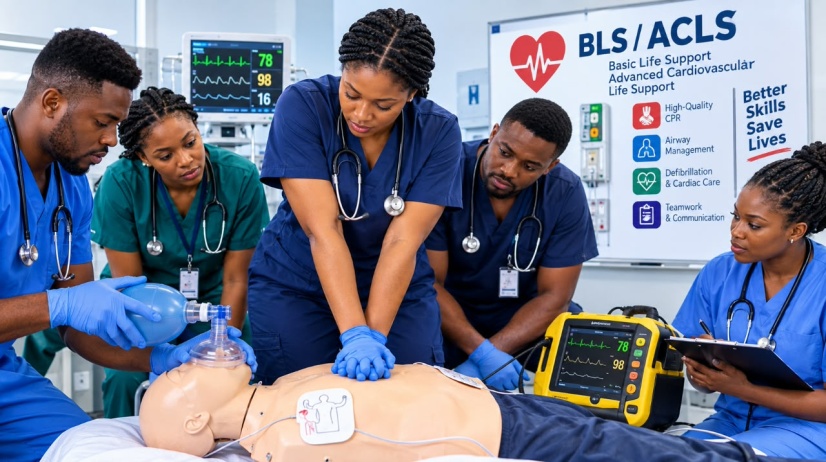
Our Advanced Cardiovascular Life Support (ACLS) Programme provides advanced training in the recognition and management of life-threatening cardiovascular emergencies, including cardiac arrest, perm-arrest conditions, serious cardiac rhythms, acute coronary syndromes, stroke recognition, airway and ventilation management, and post-cardiac-arrest care.
About this course
Our Advanced Cardiovascular Life Support (ACLS) Programme provides advanced training in the recognition and management of life-threatening cardiovascular emergencies, including cardiac arrest, perm-arrest conditions, serious cardiac rhythms, acute coronary syndromes, stroke recognition, airway and ventilation management, and post-cardiac-arrest care.
The programme is designed to strengthen the knowledge, clinical decision-making, teamwork, communication, and practical skills required by appropriately trained healthcare professionals who may participate in the management of cardiovascular emergencies.
ACLS training builds upon Basic Life Support (BLS) knowledge and focuses on systematic assessment, resuscitation algorithms, cardiac rhythm recognition, defibrillation, synchronized cardioversion, medication awareness, airway management, and coordinated team response.
The programme emphasizes rapid recognition, structured assessment, effective resuscitation, appropriate use of emergency equipment, clinical communication, teamwork, patient safety, and timely escalation to advanced medical care.
Recognise the Rhythm. Lead the Response. Support Life. Improve Emergency Care.
Learning objectives
- Recognise and assess life-threatening cardiovascular emergencies using a systematic approach.
- Understand the relationship between BLS and advanced cardiovascular life support.
- Recognise cardiac arrest rhythms and understand appropriate management pathways.
- Apply recognised adult cardiac arrest algorithms within the learner's professional scope and training.
- Understand the principles of high-quality CPR and effective defibrillation.
- Recognise when defibrillation and synchronized cardioversion may be indicated.
- Understand basic principles of airway management and ventilation during cardiovascular emergencies.
- Recognise and respond to important peri-arrest rhythms and unstable cardiovascular conditions.
- Develop awareness of medications commonly used during advanced resuscitation and understand their role within approved clinical protocols.
- Recognise acute coronary syndrome (ACS) and understand the importance of timely assessment and escalation.
- Recognise signs and symptoms associated with acute stroke and understand the importance of rapid assessment and referral.
- Understand the principles of post-cardiac-arrest care and ongoing monitoring.
- Apply structured approaches to patient assessment, reassessment, and clinical decision-making.
- Demonstrate effective resuscitation-team communication, leadership, role allocation, and teamwork.
- Communicate effectively during emergency handover and transfer of care.
- Understand the importance of documentation, clinical governance, patient safety, and professional accountability.
- Demonstrate appropriate professional conduct and work within the learner's scope of practice, competence, and applicable clinical protocols.
Who this course is for
- Doctors and medical practitioners.
- Registered nurses and other appropriately trained nursing professionals.
- Paramedics and qualified emergency medical personnel.
- Other appropriately trained healthcare professionals working in emergency, critical care, acute care, theatre, cardiac, or hospital environments.
- Healthcare professionals seeking to develop or maintain their knowledge of advanced cardiovascular emergency response.
- Clinical team members who may participate in resuscitation and emergency response teams.
Entry requirements
Student should possess an appropriate healthcare or clinical qualification relevant to advanced cardiovascular emergency care.
Student should have current or recent knowledge of Basic Life Support (BLS/CPR).
Student must be 18 years and above.
Additional professional or certification requirements may apply where the programme is linked to an external certification provider.
Important: ACLS is an advanced clinical programme. Learners should have appropriate healthcare training and current BLS knowledge before undertaking advanced resuscitation training. The specific eligibility requirements for any external ACLS certification should be confirmed with the relevant certifying organisation.
Duration & delivery format
Proposed duration: 4 weeks.
Online Classes: Monday, Wednesday & Friday, 6:00–8:00 PM
Offline Hands-On Training: 2 full practical days during the final week
Modules & syllabus
- 1. Introduction to Advanced Cardiovascular Life Support
- 2. Systematic Patient Assessment
- 3. High-Quality CPR
- 4. Cardiac Arrest Recognition and Management
- 5. Cardiac Arrest Rhythms
- 6. Defibrillation and Cardioversion
- 7. Airway Management and Ventilation
- 8. Bradycardia and Tachycardia
- 9. Pharmacology in Cardiovascular Emergencies
- 10. Acute Coronary Syndromes
- 11. Acute Stroke Recognition
- 12. Post-Cardiac-Arrest Care
- 13. ECG and Cardiac Rhythm Awareness
- 14. Emergency Team Dynamics
- 15. Resuscitation Algorithms
- 16. Airway, Oxygenation and Ventilation Strategies
- 17. Clinical Communication and Handover
- 18. Documentation, Safety and Professional Practice
- 19. ACLS Simulation and Scenario-Based Training
- 20. Practical ACLS Training and Assessment
Practical skills
- Recognise and assess life-threatening cardiovascular emergencies using a systematic approach.
- Understand the relationship between BLS and advanced cardiovascular life support.
- Recognise cardiac arrest rhythms and understand appropriate management pathways.
- Apply recognised adult cardiac arrest algorithms within the learner's professional scope and training.
- Understand the principles of high-quality CPR and effective defibrillation.
- Recognise when defibrillation and synchronized cardioversion may be indicated.
- Understand basic principles of airway management and ventilation during cardiovascular emergencies.
- Recognise and respond to important peri-arrest rhythms and unstable cardiovascular conditions.
- Develop awareness of medications commonly used during advanced resuscitation and understand their role within approved clinical protocols.
- Recognise acute coronary syndrome (ACS) and understand the importance of timely assessment and escalation.
- Recognise signs and symptoms associated with acute stroke and understand the importance of rapid assessment and referral.
- Understand the principles of post-cardiac-arrest care and ongoing monitoring.
- Apply structured approaches to patient assessment, reassessment, and clinical decision-making.
- Demonstrate effective resuscitation-team communication, leadership, role allocation, and teamwork.
- Communicate effectively during emergency handover and transfer of care.
- Understand the importance of documentation, clinical governance, patient safety, and professional accountability.
- Demonstrate appropriate professional conduct and work within the learner's scope of practice, competence, and applicable clinical protocols.
Assessment & examination
Assessment: Online/theory assessment + practical skills assessment.
Certificate information
Not specified.
Course dates & location
Not specified.
Not specified.
Your instructor
Not specified.
Your next step
Your next chapter starts here.
Find your programme, ask about entry requirements and explore flexible ways to learn. Our admissions team can help you get started.